Get Lex Autolease app
Download the Lex Autolease app now.
Lex Autolease attended FT Live’s Future of the Car Summit as a sponsor, joining leaders from across automotive, fleet, finance and policy to discuss how the market is evolving.
For businesses managing fleets, the challenge is no longer simply keeping pace with change. It is deciding how to respond to it. Electrification is advancing, vehicle choice is expanding and the wider market is becoming harder to navigate. Decisions about cost, confidence and long-term planning are becoming more connected, and the implications for fleet operators are increasingly immediate. Nick Williams highlights electrification, technology and macroeconomic conditions as the major forces shaping the market, while Paul Hyne describes a market with more models, more supply and more complexity than before.
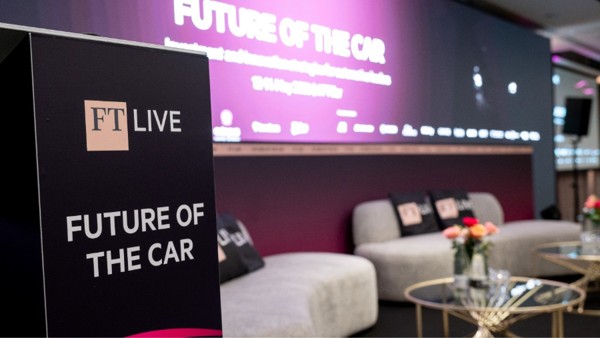
One of the clearest messages from the event was that complexity is now a defining feature of the market. Paul Hyne describes a landscape shaped by earlier policy choices, a wider range of EVs and a much broader spread of price points, all of which make forecasting and planning more difficult than they once were. He also points to the sheer increase in model choice as a factor that changes market behaviour over time.
For fleet operators, that means more opportunity, but also more variables to manage. Vehicle choice is no longer just a procurement decision. It sits alongside questions of value, timing, customer confidence and how quickly conditions may shift. That broader market context is what makes decision-making more demanding.
The wider transition story is well understood. What matters now is how change is delivered in practice. Nick Williams brings that into focus by describing the Group’s position across the end-to-end value chain, spanning manufacturers, dealer networks, consumer finance, leasing and salary sacrifice. That breadth gives a clearer view of how market shifts are being felt across different parts of automotive and mobility.
From a fleet perspective, the key issue is no longer whether electrification is happening. It is how businesses make the transition workable. That means thinking about vehicles, finance, usage and support as connected parts of the same decision rather than separate ones. Nick’s session repeatedly points to the fact that customers are trying to solve for outcomes, not navigate a series of isolated products.
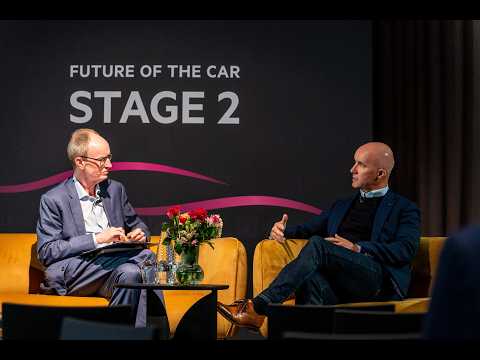
A strong thread through Nick’s session is that customers do not experience the market in fragments. He talks about the need to support customers across the journeys they are already using, whether those begin with dealers, OEMs, aggregators or finance providers, and makes clear that what matters to customers is not the structure behind the process, but whether it works for them in practice. He also points out that vehicle ownership is only part of the picture, alongside servicing, maintenance and the wider running of the vehicle.
That matters for fleets because simplifying decision-making is becoming more valuable in its own right. The more complex the market becomes, the more important it is that funding, support and vehicle management feel connected rather than fragmented. Nick’s emphasis on embedded services and connected digital journeys reinforces that point.
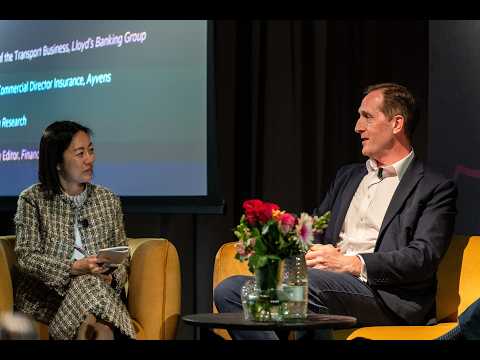
Residual value remains one of the most important issues in the market, but the way it is managed has changed. Paul Hyne makes the point that traditional methods are no longer sufficient on their own. In a market shaped by wider EV choice, changing product mix and less reliable historical comparators, static assumptions are not enough. He instead describes a more active approach built on stronger modelling, more dynamic remarketing and a broader set of mitigation tools.
That shift has clear implications for fleets. Managing value is no longer simply about setting a forecast at the start of a contract. It is about staying closer to the market and responding more actively as conditions evolve. Paul also outlines how this can include extending vehicle life, recycling vehicles into different products and using new mechanisms to manage exposure more effectively.
That brings lifecycle thinking much closer to the centre of fleet strategy. Nick Williams speaks directly about managing both the customer journey and the asset journey, and explains that vehicles are likely to remain on the road for longer, with second- and third-life options becoming more relevant. He also makes the point that used electric vehicles can play a meaningful role in improving accessibility and affordability.
Paul adds another layer to that argument by showing that this is not only about returning more vehicles to market. It is also about understanding the customers entering that market, particularly those engaging with used EVs for the first time. In his panel contribution, he says businesses need to understand what it takes for those customers to make that leap with confidence. That turns lifecycle planning into more than an operational issue. It becomes part of how demand is built and sustained.
Greater diversity in EVs is bringing clear benefits, but it is also making the market harder to interpret. Paul notes that wider manufacturer choice and lower per-car exposure can help spread risk, yet he also warns that shorter product cycles and more frequent model refreshes make setting values harder and increase instability in the market.
For fleets, that means agility matters more than ever. The market can no longer be treated as fixed. It has to be managed in motion. That requires better visibility, stronger judgement and a willingness to adapt rather than rely on static planning assumptions.
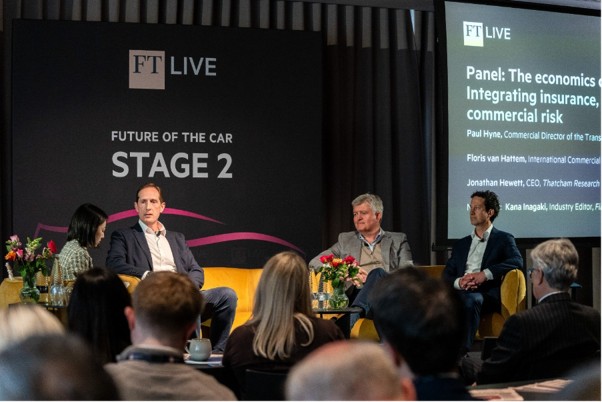
Taken together, the two sessions point to a market that is more connected, more commercially nuanced and more demanding than it was even a few years ago. Fleets are being shaped not only by electrification itself, but by the way technology, lifecycle management, customer behaviour and market structure are interacting.
For fleet operators, the opportunity remains significant. But so does the need for clarity. The businesses most likely to navigate this well will be those that take a longer-term view of value, stay close to changing customer expectations and work with partners who understand how the moving parts fit together. At Lex Autolease, that is where we focus: helping customers make decisions that are practical, commercially sound and built to work over time.
If you’re reviewing your fleet strategy and want to discuss vehicle choice, lifecycle planning or managing change in a more complex market, speak to your Relationship Manager or get in touch with our fleet team.
Published July 2026
Get in touch to find out how we can help you